
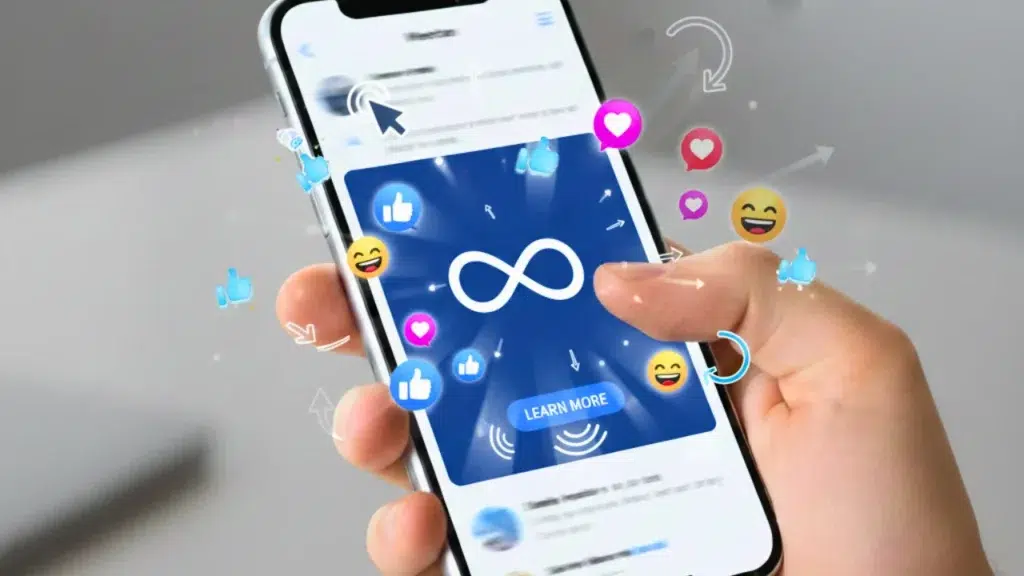
In the fast-paced digital landscape of 2026, the average social media user decides whether to engage with your content in less than two seconds. On platforms like Facebook and Instagram, your ad copy isn’t just “text”—it is the mechanical lever that determines your Click-Through Rate (CTR) and, ultimately, your Return on Ad Spend (ROAS).
Writing copy that stops the scroll requires a blend of psychological triggers, platform-native language, and a deep understanding of Meta’s shifting algorithm. Here is how to craft high-converting ad copy that turns passive scrollers into active customers.
1. The Art of the “Pattern Interrupt” Hook
The first line of your ad is the most important piece of real estate you own. In 2026, standard marketing “speak” is treated as background noise. To stop the scroll, you need a Pattern Interrupt.
A successful hook should do one of three things: challenge an assumption, agitate a specific pain point, or spark curiosity. If your hook doesn’t land, the rest of your copy—no matter how brilliant—will never be read. To see how this fits into the visual side of your strategy, explore our guide on the anatomy of a high-converting Meta ad creative.
2. Focus on “Outcome Over Features”
One of the most frequent Meta ad pitfalls is listing product features instead of consumer outcomes. Your audience doesn’t care that your software has a “cloud-based API”—they care that it “saves them 10 hours of manual work a week.”
When drafting your body copy, use the “So What?” test. For every feature you mention, ask “So what?” until you reach the emotional or practical benefit.
3. Native Platform Language and Automation
In 2026, ads that look and sound like ads are ignored. High-converting copy feels like a post from a friend or a trusted expert. This is especially true when using Meta Advantage+ campaigns to automate growth. Because Advantage+ uses broad targeting, your copy acts as the “signal” that tells the algorithm exactly who to put your ad in front of.
Using platform-native language is a core part of a modern digital marketing and PR strategy, where the goal is to build a conversation rather than just shout a message.
4. The Single-Action CTA
A common mistake is giving the user too many options. “Check out our site, follow us on Instagram, and sign up for our newsletter!” results in decision paralysis. In 2026, clarity wins. Use a single, high-intent Call to Action (CTA) like “Shop the Collection” or “Download the Blueprint.”
5. Testing and Iteration
Great ad copy is never finished; it is only ever tested. By constantly iterating on your hooks and messaging, you can find the unique “voice” that resonates with your specific audience. To speed up this process, we recommend implementing creative testing strategies to identify which copy angles drive the lowest cost per acquisition.
Navigating the nuances of digital persuasion requires a blend of data-driven tracking and high-impact creative strategy. Believe Advertising & PR works alongside ambitious brands to build the million-dollar frameworks necessary to turn Meta’s machine learning into a reliable revenue driver.
🚀 Want expert help with Facebook & Instagram ads? Believe Advertising & PR specializes in lead generation, conversions, and sales. Book in a call here to get started!